The first female of Hypnotize Minds
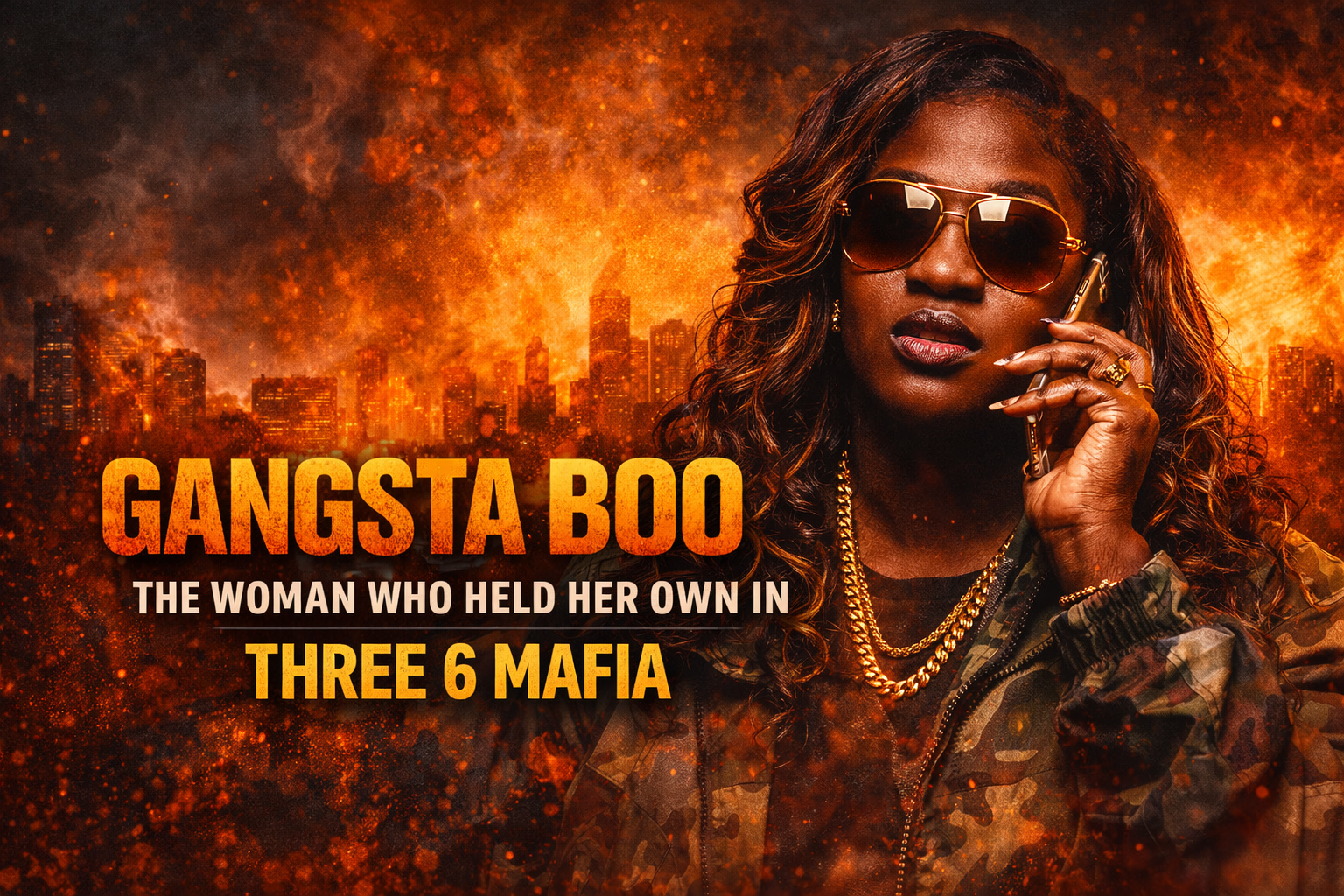
Gangsta Boo was more than just a member of Three 6 Mafia. She was a trailblazer, a survivor, and one of the most important female voices to ever come out of Memphis rap. In a genre dominated by men and hardened by street realities, Gangsta Boo stood her ground with confidence, skill, and unapologetic authenticity.
Her legacy lives on not only through her music, but through the doors she helped open for women in Southern hip-hop.
Who Was Gangsta Boo?

Born Lola Chantrelle Mitchell on August 7, 1979, in Memphis, Tennessee, Gangsta Boo entered the rap scene at a young age. She joined Three 6 Mafia in the mid-1990s as a teenager, becoming one of the few female rappers in a hardcore Southern rap group at the time.
From the start, she proved she wasn’t there as a novelty or side character. Her delivery was sharp, her lyrics were fearless, and her presence matched the dark, aggressive tone that defined the Three 6 Mafia sound.
Gangsta Boo’s Role in Three 6 Mafia
Gangsta Boo played a crucial role during Three 6 Mafia’s formative years. She appeared on classic projects like Mystic Stylez, Chapter 1: The End, and Chapter 2: World Domination. Her verses added balance to the group, offering a female perspective without softening the music.
She rapped about the same realities as her male counterparts: street life, loyalty, ambition, and survival. There was no gimmick. Gangsta Boo earned respect by matching energy, not asking for it.
At a time when female rappers were often boxed into specific roles, she existed freely within the group’s raw identity.
A Standout Solo Career
Gangsta Boo’s impact extended beyond Three 6 Mafia. In 1998, she released her debut solo album Enquiring Minds, which became one of the earliest successful solo projects from a Three 6 Mafia member. The album showcased her versatility, blending hardcore Memphis rap with moments of introspection and vulnerability.
She later released *Both Worlds, Enquiring Minds II: The Soap Opera, and other projects that reinforced her individuality as an artist. Her solo work proved she wasn’t dependent on the group’s identity. She was a fully realized artist in her own right.
Challenges, Breakups, and Resilience
Like many artists from the Memphis rap scene, Gangsta Boo faced industry challenges, personal struggles, and internal conflicts. She left Three 6 Mafia in the early 2000s amid disputes over contracts and recognition.
Despite setbacks, she continued to release music, collaborate with new generations of artists, and remain connected to the culture. Her resilience became part of her story. She didn’t disappear when things got difficult. She kept going.
Influence on Women in Hip-Hop
Gangsta Boo’s influence is often understated, but it is undeniable. She helped pave the way for women in Southern and underground hip-hop by proving that female rappers could thrive without compromising their identity.
Artists who embrace rawness, confidence, and street realism owe a debt to figures like Gangsta Boo. She normalized women occupying space in aggressive rap environments without apology.
Her presence challenged the idea that toughness, darkness, and authenticity were exclusively male traits.
Her Passing and Lasting Legacy

Gangsta Boo passed away on January 1, 2023, at the age of 43. Her death sent shockwaves through the hip-hop community, especially among Memphis artists and fans who understood her importance.
Tributes poured in from across generations, highlighting not only her talent, but her role as a pioneer. In death, her influence became even clearer.
Why Gangsta Boo Will Never Be Forgotten
Gangsta Boo will always be remembered as the woman who stood tall in one of hip-hop’s most influential groups. She didn’t ask for space. She took it. She didn’t water herself down. She stayed real.
Her voice, her story, and her impact remain essential chapters in the history of Memphis rap and Three 6 Mafia.
Gangsta Boo wasn’t just part of the movement. She helped define it.
About the Author