
Lord Infamous, born Ricky T. Dunigan, was a founding member of Three 6 Mafia and a central architect of the Memphis rap sound. Long before the triplet flow became a defining feature of trap music and modern Southern hip-hop, Lord Infamous was already using rapid, double-time cadences in underground recordings during the early 1990s.

His vocal style, delivery, and rhythmic approach helped shape not only Three 6 Mafia’s identity but also the broader direction of Southern rap for decades to come.
Lord Infamous and the Memphis Rap Scene
Memphis rap developed differently from other regional scenes. While New York emphasized lyricism and the West Coast focused on funk-driven production, Memphis artists leaned into darker themes, distorted beats, and raw, low-budget recordings.
Lord Infamous fit this environment perfectly. His voice was eerie, his delivery relentless, and his flow intentionally uncomfortable. Instead of rapping cleanly on beat, he often pushed ahead of it, creating a sense of urgency that became a defining element of Memphis hip-hop.
This approach separated Memphis rap from mainstream Southern styles and helped establish its underground reputation.
The True Origins of the Triplet Flow
The triplet flow is often credited to Atlanta, but its roots trace directly back to Memphis rap in the early 1990s. Lord Infamous consistently used rolling triplet rhythms years before the style became widely recognized.
Songs like Mystic Stylez, Anyone Out There, Now I’m Hi Pt. 2, and Where Is Da Bud showcase his early mastery of this cadence. His verses were built around repetitive rhythmic patterns that felt hypnotic, aggressive, and ominous.
This was not a technical experiment. It was a natural extension of the Memphis sound.
What Made Lord Infamous’ Flow Unique
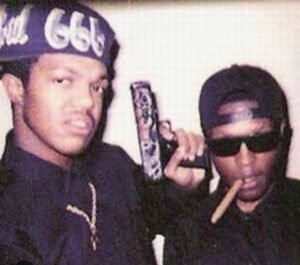
Lord Infamous’ influence extends beyond speed. His greatest strength was rhythmic control. He understood how to manipulate timing, repetition, and vocal spacing to create tension within a beat.
His delivery often felt incantatory, blending seamlessly with Three 6 Mafia’s horror-influenced production. This made his verses memorable and difficult to replicate authentically.
Many rappers adopted the cadence. Few captured the mood.
Role Within Three 6 Mafia
As a core member of Three 6 Mafia, Lord Infamous helped establish the group’s early sound. His flow balanced DJ Paul and Juicy J’s production style, adding a darker and more aggressive vocal presence.
During the group’s underground era, his delivery became one of their most recognizable traits. Even as Three 6 Mafia transitioned toward more mainstream success, the influence of his vocal style remained embedded in their music.
Influence on Modern Southern Rap
Lord Infamous’ rhythmic blueprint became a foundation for modern trap and Southern hip-hop. His influence can be heard in artists such as:
- Migos
- Future
- Drake
- Travis Scott
- $uicideboy$

While these artists helped popularize triplet flows globally, the cadence itself originated in Memphis and spread through imitation rather than acknowledgment.
Why Lord Infamous Was Overlooked
Several factors contributed to Lord Infamous’ lack of mainstream recognition:
- Memphis rap was marginalized by the music industry in the 1990s
- Three 6 Mafia’s dark themes limited radio exposure
- Underground rap received little historical documentation
- His influence was absorbed without proper credit
By the time triplet flows dominated mainstream rap, the origin story had largely been erased.
Lasting Legacy
Lord Infamous’ contribution to hip-hop extends beyond Three 6 Mafia. His flow reshaped how rappers approach rhythm, timing, and repetition. Elements of his style remain central to trap music and modern Southern rap.
His influence continues to exist, even when his name is left out of the conversation.
From Memphis to Modern Hip-Hop
Lord Infamous did not follow trends. He created a blueprint that others later refined and commercialized. His sound traveled from underground Memphis tapes to global playlists without ever needing mainstream validation.
The production evolved.
The cadence spread.
The influence remained.
About the Author